Thursday, 15 October 2015

In lesson three we worked on where a beats where in our scenes 

A beat 

A beat a is a section of the text in   which mini objectives are per sued And attended or blocked changing the dynamic of the situation 
Beats are often marked by, the entrance or exit of character a change in subject manner a silence or  moment of inaction a change in character or behaviour, when beats happen they should be seamless.

notes

i had to work on owning my beat changes and  be confident to pick up on peoples cues, learn the thoughts behind the words. Have your moments, find the stakes, find the contrast and project voice

Wednesday, 14 October 2015

Hedda Gabler evaluation

overall, i think my performance went really well and there were no real major mistakes, for me i felt really confident in my performance as our scene rehearsals went really well and from an early stage new my objectives in scene which made it really easy for line learning. also i though the opening of the play went really as well, were we all start of laying on the floor doing our gestures, then we moved into standing whilst carrying on with our gestures, i thought this helped a lot with getting into character which overall helped everybody out as we all got into the mindset for whoever we were playing in Hedda Gabler.

Thursday, 8 October 2015


Stanislavski's system


Stanislavski's system is a progression of techniques used to train actors and actresses to draw believable emotions to their performances. The method that was originally created and used by Constantin Stanislavski from 1911 to 1916 was based on the concept of emotional memory for which an actor focuses internally to portray a character's emotions onstage. Later, between 1934 and 1938, this technique evolved to a method of physical actions in which emotions are produced through the use of these actions.The latter technique is referred to as Stanislavski's system. This approach was developed by Constantin Stanislavski (1863–1938), a Russian actor,director, and theatre administrator at the Moscow Art Theatre (founded 1897). The system is the result of Stanislavski's many years of efforts to determine how someone can control in performance the most intangible and uncontrollable aspects of human behavior, such as emotions and art inspiration.

source taken from Wikipedia 

Tuesday, 6 October 2015

My charactor 

George Tesman   -  Tesman is an amiable, intelligent young scholar. He tries very hard to please his young wife, Hedda, and often does not realize that she is manipulating him. In fact, he often seems foolish for his age, and when he annoys Hedda, the audience has reason to sympathize with her. Tesman is hoping for a professorship in history, and at the beginning of the play it seems that his one great rival, Ejlert Lovborg, a notorious alcoholic, no longer stands in Tesman's way. Tesman was raised by his Aunt Julle.
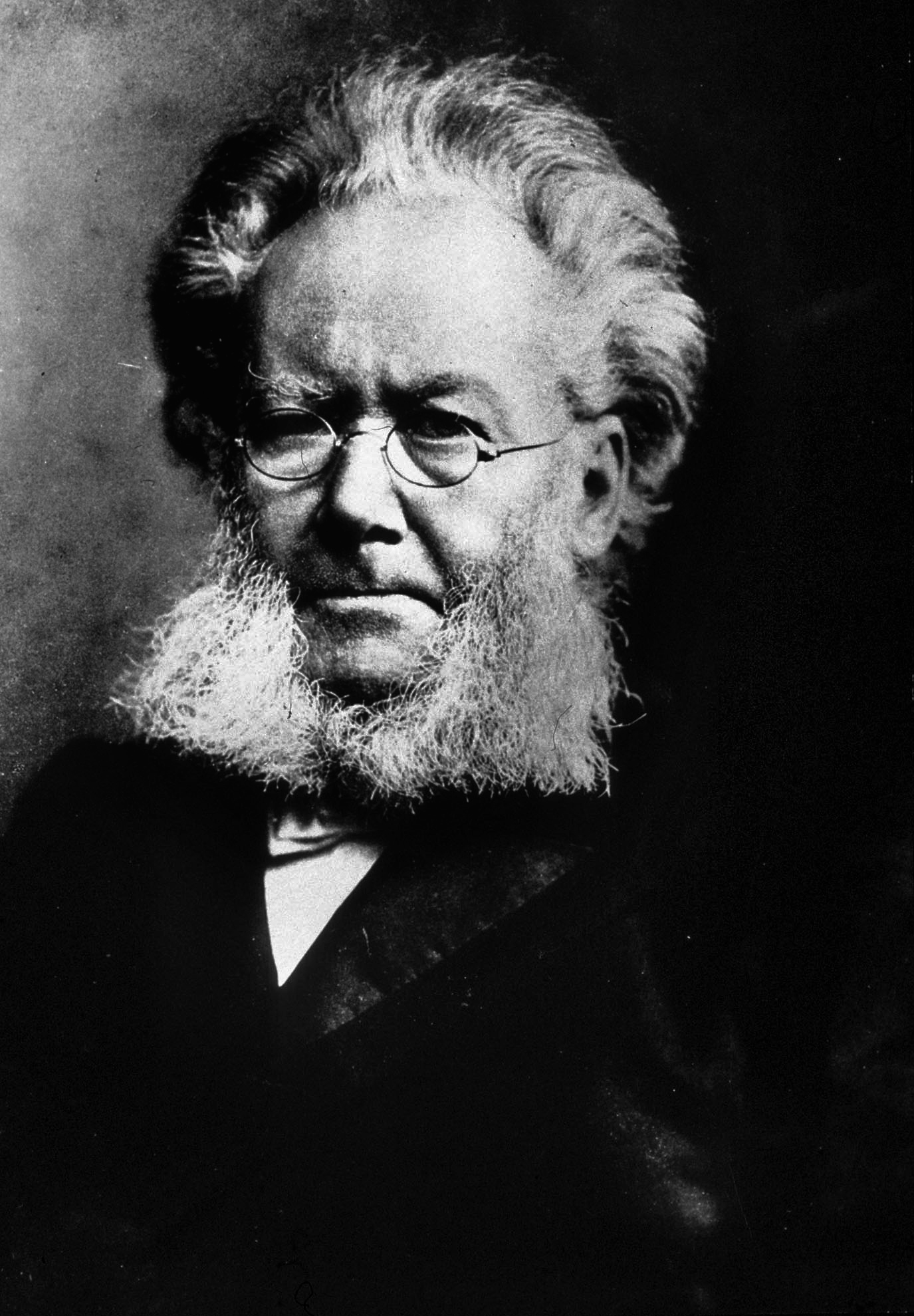
A bit about Henrik Ibsen


Henrik Ibsen is one of the world's greatest dramatists. He was the leading figure of an artistic renaissance that took place in Norway around the end of the nineteenth century, in which the work of the artist Edward Munch also played a part. Ibsen lived from 1828 to 1906. He grew up in poverty, studied medicine for a while, and then abandoned that to write plays. In 1858, he published his first play, The Vikings at Helgeland, and married Susannah Thoresen, the daughter of a pastor.